react-native-video-processing
Version:
Native Video processing/editing for React-Native
128 lines (109 loc) • 4.86 kB
Markdown
## react-native-video-processing
[](https://travis-ci.org/shahen94/react-native-video-processing) [](https://github.com/semantic-release/semantic-release) [](https://badge.fury.io/js/react-native-video-processing) 
### Getting Started
```sh
npm install react-native-video-processing --save
```
### You can check test just running
`$ npm test` or `$ yarn test`
### Manual installation
**Note: For RN 0.4x use 1.0 version, For RN 0.3x use 0.16**
#### [Android]
```sh
$ react-native link react-native-video-processing
```
#### [iOS]
1. In Xcode, click the "Add Files to <your-project-name>".
2. Go to `node_modules` ➜ `react-native-video-processing/ios` and add `RNVideoProcessing` directory.
3. Make sure `RNVideoProcessing` is "under" the "top-level".
4. Add `GPUImage.xcodeproj` from `node_modules/react-native-video-processing/ios/GPUImage/framework` directory to your project and make sure it is "under" the "top-level":

5. In XCode, in the project navigator, select your project.
Add
- CoreMedia
- CoreVideo
- OpenGLES
- AVFoundation
- QuartzCore
- GPUImage
- MobileCoreServices
to your project's `Build Phases` ➜ `Link Binary With Libraries`.
6. Import `RNVideoProcessing.h` into your `project_name-bridging-header.h`.
7. Clean and Run your project.
## Usage
```javascript
import React, { Component } from 'react';
import { View } from 'react-native';
import { VideoPlayer, Trimmer } from 'react-native-video-processing';
class App extends Component {
trimVideo() {
const options = {
startTime: 0,
endTime: 15,
quality: VideoPlayer.Constants.quality.QUALITY_1280x720,
saveToCameraRoll: true, // default is false
saveWithCurrentDate: true, // default is false
};
this.videoPlayerRef.trim(require('./videoFile.mp4'), options)
.then((newSource) => console.log(newSource))
.catch(console.warn);
}
compressVideo() {
const options = {
width: 720,
endTime: 1280,
bitrateMultiplier: 3,
saveToCameraRoll: true, // default is false
saveWithCurrentDate: true, // default is false
minimumBitrate: 300000
};
this.videoPlayerRef.compress(require('./videoFile.mp4'), options)
.then((newSource) => console.log(newSource))
.catch(console.warn);
}
getPreviewImageForSecond(second) {
const maximumSize = { width: 640, height: 1024 }; // default is { width: 1080, height: 1080 }
this.videoPlayerRef.getPreviewForSecond(require('./videoFile.mp4'), second, maximumSize)
.then((base64String) => console.log('This is BASE64 of image', base64String))
.catch(console.warn);
}
getVideoInfo() {
this.videoPlayerRef.getVideoInfo(require('./videoFile.mp4'))
.then((info) => console.log(info))
.catch(console.warn);
}
render() {
return (
<View style={{ flex: 1 }}>
<VideoPlayer
ref={ref => this.videoPlayerRef = ref}
startTime={30} // seconds
endTime={120} // seconds
play={true} // default false
replay={true} // should player play video again if it's ended
rotate={true} // use this prop to rotate video if it captured in landscape mode
source={require('./videoFile.mp4')}
playerWidth={300}
playerHeight={500}
style={{ backgroundColor: 'black' }}
onChange={({ nativeEvent }) => console.log({ nativeEvent })}
/>
<Trimmer
source={require('./videoFile.mp4')}
height={100}
width={300}
currentTime={this.video.currentTime} // use this prop to set tracker position
themeColor={'white'}
trackerColor={'green'}
onChange={(e) => console.log(e.startTime, e.endTime)}
/>
</View>
);
}
}
```
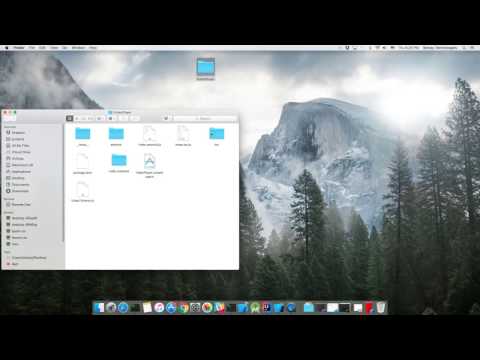
### How to setup Library
[](https://youtu.be/HRjgeT6NQJM)
##Contributing
1. Please follow the eslint style guide.
2. Please commit with `$ npm run commit`