qlobber-fsq
Version:
Shared file system queue. Supports pub-sub, work queues, wildcards, multi-process and distributed use.
1,341 lines (1,066 loc) • 97.2 kB
JavaScript
/**
# qlobber-fsq [](https://github.com/davedoesdev/qlobber-fsq/actions) [](https://github.com/davedoesdev/qlobber-fsq/actions) [](https://coveralls.io/r/davedoesdev/qlobber-fsq?branch=master) [](http://badge.fury.io/js/qlobber-fsq)
Shared file system queue for Node.js.
- **Note:** Version 12.1.0 supports direct producer-to-subscriber streams where the data doesn't go via the filesystem. See the `direct_handler` option to the [`QlobberFSQ constructor`](#qlobberfsqoptions) and the `direct` option to [`publish`](#qlobberfsqprototypepublishtopic-payload-options-cb).
- **Note:** Version 9 can use [shared memory LMAX Disruptors](https://github.com/davedoesdev/shared-memory-disruptor) to speed things up on a single multi-core server.
- Supports pub-sub and work queues.
- Supports local file system for multi-core use.
- Tested with [FraunhoferFS (BeeGFS)](http://www.fhgfs.com/) and [CephFS](http://ceph.com/ceph-storage/file-system/) for distributed use.
- **Note:** An alternative module, [`qlobber-pg`](https://github.com/davedoesdev/qlobber-pg), can be used when you need access from multiple hosts. It's API-compatible with `qlobber-fsq` and requires a PostgreSQL database.
- Highly configurable.
- Full set of unit tests, including stress tests.
- Use as a backend-less alternative to [RabbitMQ](http://www.rabbitmq.com/), [Redis pub-sub](http://redis.io/topics/pubsub) etc.
- Supports AMQP-like topics with single- and multi-level wildcards.
- Tested on Linux and Windows.
Example:
```javascript
var QlobberFSQ = require('qlobber-fsq').QlobberFSQ;
var fsq = new QlobberFSQ({ fsq_dir: '/shared/fsq' });
fsq.subscribe('foo.*', function (data, info)
{
console.log(info.topic, data.toString('utf8'));
var assert = require('assert');
assert.equal(info.topic, 'foo.bar');
assert.equal(data, 'hello');
});
fsq.on('start', function ()
{
this.publish('foo.bar', 'hello');
});
```
You can publish messages using a separate process if you like:
```javascript
var QlobberFSQ = require('qlobber-fsq').QlobberFSQ;
var fsq = new QlobberFSQ({ fsq_dir: '/shared/fsq' });
fsq.stop_watching();
fsq.on('stop', function ()
{
this.publish('foo.bar', 'hello');
});
```
Or use the streaming interface to read and write messages:
```javascript
const { QlobberFSQ } = require('qlobber-fsq');
const fsq = new QlobberFSQ({ fsq_dir: '/shared/fsq' });
function handler(stream, info)
{
const data = [];
stream.on('readable', function ()
{
let chunk;
while (chunk = this.read())
{
data.push(chunk);
}
});
stream.on('end', function ()
{
const str = Buffer.concat(data).toString('utf8');
console.log(info.topic, str);
const assert = require('assert');
assert.equal(info.topic, 'foo.bar');
assert.equal(str, 'hello');
});
}
handler.accept_stream = true;
fsq.subscribe('foo.*', handler);
fsq.on('start', function ()
{
fsq.publish('foo.bar').end('hello');
});
```
The API is described [here](#tableofcontents).
## Installation
```shell
npm install qlobber-fsq
```
## Limitations
- `qlobber-fsq` provides no guarantee that the order messages are given to subscribers is the same as the order in which the messages were written. If you want to maintain message order between readers and writers then you'll need to do it in your application (using ACKs, sliding windows etc). Alternatively, use the `order_by_expiry` [constructor](#qlobberfsqoptions) option to have messages delivered in order of the time they expire.
- `qlobber-fsq` does its best not to lose messages but in exceptional circumstances (e.g. process crash, file system corruption) messages may get dropped. You should design your application to be resilient against dropped messages.
- `qlobber-fsq` makes no assurances about the security or privacy of messages in transit or at rest. It's up to your application to encrypt messages if required.
- `qlobber-fsq` supports Node 6 onwards.
## Distributed filesystems
Note: When using a distributed file system with `qlobber-fsq`, ensure that you synchronize the time and date on all the computers you're using.
### FraunhoferFS (BeeGFS)
When using the FraunhoferFS distributed file system, set the following options in `fhgfs-client.conf`:
```
tuneFileCacheType = none
tuneUseGlobalFileLocks = true
```
`qlobber-fsq` has been tested with FraunhoferFS 2014.01 on Ubuntu 14.04 and FraunhoferFS 2012.10 on Ubuntu 13.10.
### CephFS
`qlobber-fsq` has been tested with CephFS 0.80 on Ubuntu 14.04. Note that you'll need to [upgrade your kernel](http://www.yourownlinux.com/2014/04/install-upgrade-to-linux-kernel-3-14-1-in-linux.html) to at least 3.14.1 in order to get the fix for [a bug](http://tracker.ceph.com/issues/7371) in CephFS.
## How it works
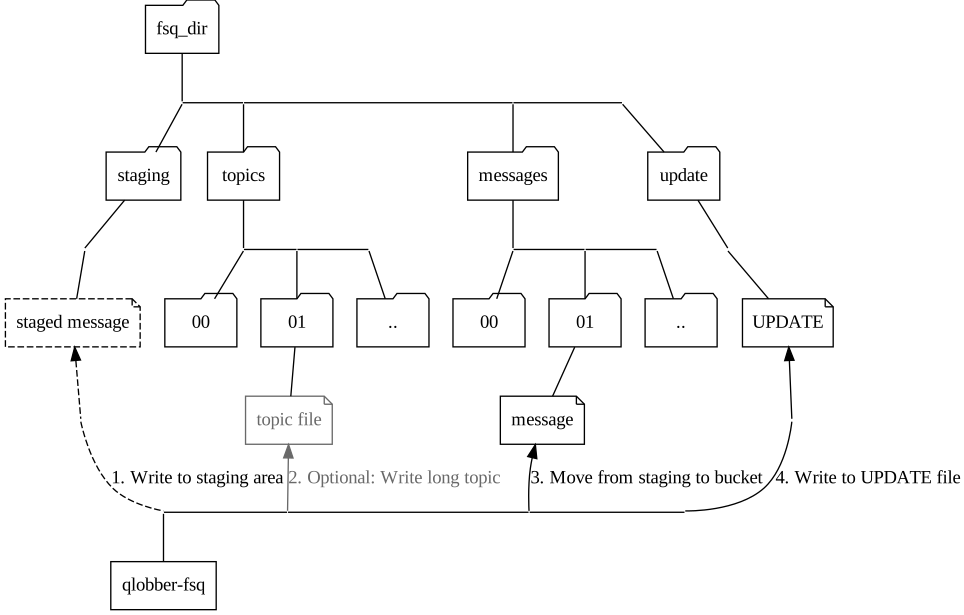
Under the directory you specify for `fsq_dir`, `qlobber-fsq` creates the following sub-directories:
- `staging` Whilst it's being published, each message is written to a file in the staging area. The filename itself contains the message's topic, when it expires, whether it should be read by one subscriber or many and a random sequence of characters to make it unique.
- `messages` Once published to the staging area, each message is moved into this directory. `qlobber-fsq` actually creates a number of sub-directories (called buckets) under `messages` and distributes message between buckets according to the hash of their filenames. This helps to reduce the number of directory entries that have to be read when a single message is written.
- `topics` If a message's topic is long, a separate topic file is created for it in this directory.
- `update` This contains one file, `UPDATE`, which is updated with a random sequence of bytes (called a stamp) every time a message is moved into the `messages` directory. `UPDATE` contains a separate stamp for each bucket.
`qlobber-fsq` reads `UPDATE` at regular intervals to determine whether a new message has been written to a bucket. If it has then it processes each filename in the bucket's directory listing.
If the expiry time in the filename has passed then it deletes the message.
If the filename indicates the message can be read by many subscribers:
- If it's processed this filename before then stop processing this filename.
- If the topic in the filename matches any subscribers then call each subscriber with the file's content. It uses [`qlobber`](https://github.com/davedoesdev/qlobber) to pattern match topics to subscribers.
- Remember that we've processed the filename.
If the filename indicates the message can be read by only one subscriber (i.e. work queue semantics):
- Try to lock the file using `flock`. If it fails to lock the file then stop processing this filename.
- If the topic in the filename matches any subscribers then call one subscriber with the file's content.
- Truncate and delete the file before unlocking it. We truncate the file in case of directory caching.
## Licence
[MIT](LICENCE)
## Test
To run the default tests:
```shell
grunt test [--fsq-dir=<path>] [--getdents_size=<buffer size>] [--disruptor]
```
If you don't specify `--fsq-dir` then the default will be used (a directory named `fsq` in the `test` directory).
If you specify `--getdents_size` then use of [`getdents`](https://github.com/davedoesdev/getdents) will be included in the tests.
If you specify `--disruptor` then use of [shared memory LMAX Disruptors](https://github.com/davedoesdev/shared-memory-disruptor) will be included in the tests.
To run the stress tests (multiple queues in a single Node process):
```shell
grunt test-stress [--fsq-dir=<path>] [--disruptor]
```
To run the multi-process tests (each process publishing and subscribing to different messages):
```shell
grunt test-multi [--fsq-dir=<path>] [--queues=<number of queues>] [--disruptor]
```
If you omit `--queues` then one process will be created per core (detected with [`os.cpus()`](http://nodejs.org/api/os.html#os_os_cpus)).
To run the distributed tests (one process per remote host, each one publishing and subscribing to different messages):
```shell
grunt test-multi --fsq-dir=<path> --remote=<host1> --remote=<host2>
```
You can specify as many remote hosts as you like. The test uses [`cp-remote`](https://github.com/davedoesdev/cp-remote) to run a module on each remote host. Make sure on each host:
- The `qlobber-fsq` module is installed at the same location.
- Mount the same distributed file system on the directory you specify for `--fsq-dir`. FraunhoferFS and CephFS are the only distributed file systems currently supported.
Please note the distributed tests don't run on Windows.
## Lint
```shell
grunt lint
```
## Code Coverage
```shell
grunt coverage [--fsq-dir=<path>]
```
[c8](https://github.com/bcoe/c8) results are available [here](http://rawgit.davedoesdev.com/davedoesdev/qlobber-fsq/master/coverage/lcov-report/index.html).
Coveralls page is [here](https://coveralls.io/r/davedoesdev/qlobber-fsq).
## Benchmarks
To run the benchmark:
```shell
grunt bench [--fsq-dir=<path>] \
--rounds=<number of rounds> \
--size=<message size> \
--ttl=<message time-to-live in seconds> \
[--disruptor] \
[--num_elements=<number of disruptor elements>] \
[--element_size=<disruptor element size>] \
[--bucket_stamp_size=<number of bytes to write to UPDATE file] \
[--getdents_size=<buffer size>] \
[--ephemeral] \
[--refresh_ttl=<period between expiration check in seconds>] \
(--queues=<number of queues> | \
--remote=<host1> --remote=<host2> ...)
```
If you don't specify `--fsq-dir` then the default will be used (a directory named `fsq` in the `bench` directory).
If you provide at least one `--remote=<host>` argument then the benchmark will be distributed across multiple hosts using [`cp-remote`](https://github.com/davedoesdev/cp-remote). Make sure on each host:
- The `qlobber-fsq` module is installed at the same location.
- Mount the same distributed file system on the directory you specify for `--fsq-dir`. FraunhoferFS and CephFS are the only distributed file systems currently supported.
# API
*/
"use strict";
var stream = require('stream'),
path = require('path'),
crypto = require('crypto'),
util = require('util'),
events = require('events'),
constants = require('constants'),
async = require('async'),
wu = require('wu'),
semver = require('semver'),
qlobber = require('qlobber'),
Qlobber = qlobber.Qlobber,
QlobberDedup = qlobber.QlobberDedup;
function CollectStream()
{
stream.Writable.call(this);
this.setMaxListeners(0);
this._chunks = [];
this._len = 0;
var ths = this;
this.on('finish', function ()
{
ths.emit('buffer', Buffer.concat(ths._chunks, ths._len));
});
}
util.inherits(CollectStream, stream.Writable);
CollectStream.prototype._write = function (chunk, encoding, callback)
{
this._chunks.push(chunk);
this._len += chunk.length;
callback();
};
/*function sum(buf, start, end)
{
var i, r = 0;
for (i = start; i < end; i += 1)
{
r += buf[i];
}
return r;
}*/
/**
Creates a new `QlobberFSQ` object for publishing and subscribing to a file system queue.
@constructor
@param {Object} [options] Configures the file system queue. Valid properties are listed below:
- `{String} fsq_dir` The path to the file system queue directory. Note that the following sub-directories will be created under this directory if they don't exist: `messages`, `staging`, `topics` and `update`. Defaults to a directory named `fsq` in the `qlobber-fsq` module directory.
- `{Boolean} encode_topics` Whether to hex-encode message topics. Because topic strings form part of message filenames, they're first hex-encoded. If you can ensure that your message topics contain only valid filename characters, set this to `false` to skip encoding. Defaults to `true`.
- `{Integer} split_topic_at` Maximum number of characters in a short topic. Short topics are contained entirely in a message's filename. Long topics are split so the first `split_topic_at` characters go in the filename and the rest are written to a separate file in the `topics` sub-directory. Obviously long topics are less efficient. Defaults to 200, which is the maximum for most common file systems. Note: if your `fsq_dir` is on an [`ecryptfs`](http://ecryptfs.org/) file system then you should set `split_topic_at` to 100.
- `{Integer} bucket_base`, `{Integer} bucket_num_chars` Messages are distributed across different _buckets_ for efficiency. Each bucket is a sub-directory of the `messages` directory. The number of buckets is determined by the `bucket_base` and `bucket_num_chars` options. `bucket_base` is the radix to use for bucket names and `bucket_num_chars` is the number of digits in each name. For example, `bucket_base: 26` and `bucket_num_chars: 4` results in buckets `0000` through `pppp`. Defaults to `base_base: 16` and `bucket_num_chars: 2` (i.e. buckets `00` through `ff`). The number of buckets is available as the `num_buckets` property of the `QlobberFSQ` object.
- `{Integer} bucket_stamp_size` The number of bytes to write to the `UPDATE` file when a message is published. The `UPDATE` file (in the `update` directory) is used to determine whether any messages have been published without having to scan all the bucket directories. Each bucket has a section in the `UPDATE` file, `bucket_stamp_size` bytes long. When a message is written to a bucket, its section is filled with random bytes. Defaults to 32. If you set this to 0, the `UPDATE` file won't be written to and all the bucket directories will be scanned even if no messages have been published.
- `{Integer} flags` Extra flags to use when reading and writing files. You shouldn't need to use this option but if you do then it should be a bitwise-or of values in the (undocumented) Node `constants` module (e.g. `constants.O_DIRECT | constants.O_SYNC`). Defaults to 0.
- `{Integer} unique_bytes` Number of random bytes to append to each message's filename (encoded in hex), in order to avoid name clashes. Defaults to 16. If you increase it (or change the algorithm to add some extra information like the hostname), be sure to reduce `split_topic_at` accordingly.
- `{Integer} single_ttl` Default time-to-live (in milliseconds) for messages which should be read by at most one subscriber. This value is added to the current time and the resulting expiry time is put into the message's filename. After the expiry time, the message is ignored and deleted when convenient. Defaults to 1 hour.
- `{Integer} multi_ttl` Default time-to-live (in milliseconds) for messages which can be read by many subscribers. This value is added to the current time and the resulting expiry time is put into the message's filename. After the expiry time, the message is ignored and deleted when convenient. Defaults to 1 minute.
- `{Integer} poll_interval` `qlobber-fsq` reads the `UPDATE` file at regular intervals to check whether any messages have been written. `poll_interval` is the time (in milliseconds) between each check. Defaults to 1 second.
- `{Boolean} notify` Whether to use [`fs.watch`](http://nodejs.org/api/fs.html#fs_fs_watch_filename_options_listener) to watch for changes to the `UPDATE` file. Note that this will be done in addition to reading it every `poll_interval` milliseconds because `fs.watch` (`inotify` underneath) can be unreliable, especially under high load. Defaults to `true`.
- `{Integer} retry_interval` Some I/O operations can fail with an error indicating they should be retried. `retry_interval` is the time (in milliseconds) to wait before retrying. Defaults to 1 second.
- `{Integer} message_concurrency` The number of messages in each bucket to process at once. Defaults to 1.
- `{Integer} bucket_concurrency` The number of buckets to process at once. Defaults to 1.
- `{Integer} handler_concurrency` By default, a message is considered handled by a subscriber only when all its data has been read. If you set `handler_concurrency` to non-zero, a message is considered handled as soon as a subscriber receives it. The next message will then be processed straight away. The value of `handler_concurrency` limits the number of messages being handled by subscribers at any one time. Defaults to 0 (waits for all message data to be read).
- `{Boolean} order_by_expiry` Pass messages to subscribers in order of their expiry time. If `true` then `bucket_base` and `bucket_num_chars` are forced to 1 so messages are written to a single bucket. Defaults to `false`.
- `{Boolean} dedup` Whether to ensure each handler function is called at most once when a message is received. Defaults to `true`.
- `{Boolean} single` Whether to process messages meant for _at most_ one subscriber (across all `QlobberFSQ` objects), i.e. work queues. This relies on the optional dependency [`fs-ext`](https://github.com/baudehlo/node-fs-ext). Defaults to `true` if `fs-ext` is installed, otherwise `false` (in which case a [`single_disabled`](#qlobberfsqeventssingle_disablederr) event will be emitted).
- `{String} separator` The character to use for separating words in message topics. Defaults to `.`.
- `{String} wildcard_one` The character to use for matching exactly one word in a message topic to a subscriber. Defaults to `*`.
- `{String} wildcard_some` The character to use for matching zero or more words in a message topic to a subscriber. Defaults to `#`.
- `{Integer} getdents_size` If positive, use [`getdents`](https://github.com/davedoesdev/getdents) to enumerate messages in bucket directories. `getdents_size` is the buffer size to use with `getdents`. Otherwise, use [`fs.readdir`](https://nodejs.org/api/fs.html#fs_fs_readdir_path_options_callback) (which is the default). If `getdents` is requested but unavailable, a [`getdents_disabled`](#qlobberfsqeventsgetdents_disablederr) event will be emitted.
- `{Function (info, handlers, cb(err, ready, filtered_handlers)) | Array} filter` Function called before each message is processed.
- You can use this to filter the subscribed handler functions to be called for the message (by passing the filtered list as the third argument to `cb`).
- If you want to ignore the message _at this time_ then pass `false` as the second argument to `cb`. `filter` will be called again later with the same message.
- Defaults to a function which calls `cb(null, true, handlers)`.
- `handlers` is an ES6 Set, or array if `options.dedup` is falsey.
- `filtered_handlers` should be an ES6 Set, or array if `options.dedup` is falsey. If not, `new Set(filtered_handlers)` or `Array.from(filtered_handlers)` will be used to convert it.
- You can supply an array of filter functions - each will be called in turn with the `filtered_handlers` from the previous one.
- An array containing the filter functions is also available as the `filters` property of the `QlobberFSQ` object and can be modified at any time.
- `{Function (bucket)} [get_disruptor]` You can speed up message processing on a single multi-core server by using [shared memory LMAX Disruptors](https://github.com/davedoesdev/shared-memory-disruptor). Message metadata and (if it fits) payload will be sent through the Disruptor. `get_disruptor` will be called for each bucket number and should return the Disruptor to use for that bucket or `null`. The same disruptor can be used for more than one bucket if you wish.
- `{Integer} refresh_ttl` If you use a shared memory LMAX Disruptor for a bucket (see `get_disruptor` above), notification of new messages in the bucket is received through the Disruptor. However, checking for expired messages still needs to read the filesystem. `refresh_ttl` is the time (in milliseconds) between checking for expired messages when a Disruptor is in use. Defaults to 10 seconds.
- `{Integer} disruptor_spin_interval` If a Disruptor is shared across multiple buckets or multiple `QlobberFSQ` instances, contention can occur when publishing a message. In this case [`publish`](#qlobberfsqprototypepublishtopic-payload-options-cb) will try again until it succeeds. `disruptor_spin_interval` is the time (in milliseconds) to wait before retrying. Defaults to 0.
- `{Object} [direct_handler]` Object with the following methods, used for transferring messages direct from publisher to subscribers without writing them to disk:
- `{Function (filename, direct)} get_stream_for_publish` Called by [`publish`](#qlobberfsqprototypepublishtopic-payload-options-cb) when truthy `options.direct` is passed to it instead of writing data to disk. This method receives the name of the file to which data would have been written plus the value of `options.direct` that was passed to [`publish`](#qlobberfsqprototypepublishtopic-payload-options-cb). Whatever it returns will be returned by the call to [`publish`](#qlobberfsqprototypepublishtopic-payload-options-cb).
- `{Function (filename)} get_stream_for_subscribers` Called when a stream published by calling [`publish`](#qlobberfsqprototypepublishtopic-payload-options-cb) with truthy `options.direct` needs to be given to subscribers. It receives the name of the file to which data would have been written. It must return a [Readable](http://nodejs.org/api/stream.html#stream_class_stream_readable) stream.
- `{Function (filename, stream)} publish_stream_destroyed` Called when a stream returned by `get_stream_for_publish()` has been destroyed or the message has expired. It receives the name of the file passed to `get_stream_for_publish() and the destroyed stream.
- `{Function (filename)} publish_stream_expired` Called when a stream returned by `get_stream_for_publish()` has expired and should be destroyed. It receives the name of the file passed to `get_stream_for_publish()`.
- `{Function (filename, stream)} subscriber_stream_destroyed` Called when a stream returned by `get_stream_for_subscribers()` has been destroyed or the message has expired. It receives the name of the file passed to `get_stream_for_subscribers()` and the destroyed stream.
- `{Function (filename)} subscriber_stream_ignored` Called when a stream published by calling [`publish`](#qlobberfsqprototypepublishtopic-payload-options-cb) with truthy `options.direct` doesn't have any subscribers. It receives the name of the file to which data would have been written.
*/
function QlobberFSQ(options)
{
events.EventEmitter.call(this);
options = options || {};
this._fsq_dir = options.fsq_dir || path.join(__dirname, '..', 'fsq');
this._msg_dir = this._fsq_dir + path.sep + 'messages';
this._topic_dir = this._fsq_dir + path.sep + 'topics';
this._staging_dir = this._fsq_dir + path.sep + 'staging';
this._update_dir = this._fsq_dir + path.sep + 'update';
this._update_fname = this._update_dir + path.sep + 'UPDATE';
this._encode_topics = options.encode_topics === undefined ? true : options.encode_topics;
this._split_topic_at = options.split_topic_at || 200;
this._bucket_base = options.bucket_base || 16;
this._bucket_num_chars = options.bucket_num_chars || 2;
this._bucket_stamp_size = options.bucket_stamp_size === undefined ? 32 : options.bucket_stamp_size;
this._flags = options.flags || 0;
this._unique_bytes = options.unique_bytes || 16;
this._single_ttl = options.single_ttl || (60 * 60 * 1000); // 1 hour
this._multi_ttl = options.multi_ttl || (60 * 1000); // 1 minute
this._poll_interval = options.poll_interval || 1000; // 1 second
this._retry_interval = options.retry_interval || 1000; // 1 second
this._disruptor_spin_interval = options.disruptor_spin_interval === undefined ? 0 : options.disruptor_spin_interval;
this._message_concurrency = options.message_concurrency || 1;
this._bucket_concurrency = options.bucket_concurrency || 1;
this._order_by_expiry = options.order_by_expiry;
if (this._order_by_expiry)
{
this._bucket_base = 1;
this._bucket_num_chars = 1;
}
this._do_dedup = options.dedup === undefined ? true : options.dedup;
this._do_single = options.single === undefined ? true : options.single;
this._direct_handler = options.direct_handler;
if (this._do_dedup)
{
this._matcher = new QlobberDedup(options);
}
else
{
this._matcher = new Qlobber(options);
}
this._matcher_marker = {};
this._extra_matcher = null;
this._leading_byte = Buffer.from([0]);
this._disruptors = [];
this.num_buckets = QlobberFSQ.get_num_buckets(this._bucket_base,
this._bucket_num_chars);
this._last_refreshed = new Map();
var ths = this,
delivered = new Map(),
pending = new Map(),
bucket_formats = [],
handler_queue,
refresh_ttl = options.refresh_ttl === undefined ?
10 * 1000 : options.refresh_ttl,
dirs = [this._fsq_dir,
this._staging_dir,
this._update_dir,
this._msg_dir,
this._topic_dir];
this._ensure_extra_matcher = function ()
{
if (!ths._extra_matcher)
{
if (ths._do_dedup)
{
ths._extra_matcher = new QlobberDedup(options);
}
else
{
ths._extra_matcher = new Qlobber(options);
}
ths._extra_matcher._extra_handlers = new Map();
ths._extra_matcher._matcher_markers = new Map();
ths._extra_matcher._not_seen = new Map();
}
return ths._extra_matcher;
};
this.filters = options.filter || [];
if (typeof this.filters[Symbol.iterator] !== 'function')
{
this.filters = [this.filters];
}
function filter(info, handlers, cb)
{
function next(i)
{
return function (err, ready, handlers)
{
if (handlers)
{
if (ths._do_dedup)
{
if (!(handlers instanceof Set))
{
handlers = new Set(handlers);
}
}
else if (!Array.isArray(handlers))
{
handlers = Array.from(handlers);
}
}
if (err || !ready || (i === ths.filters.length))
{
return cb(err, ready, handlers);
}
ths.filters[i].call(ths, info, handlers, next(i + 1));
};
}
next(0)(null, true, handlers);
}
function copy(handlers)
{
return ths._do_dedup ? new Set(handlers) : Array.from(handlers);
}
this._error = function (err)
{
if (err)
{
var i, silent = false;
for (i = 1; i < arguments.length; i += 1)
{
if (arguments[i] && (err.code === arguments[i]))
{
silent = true;
break;
}
}
if ((!silent) && !ths.emit('warning', err))
{
console.error(err);
}
}
return err;
};
this.stopped = false;
this.active = true;
this.initialized = false;
this._chkstop = function ()
{
if (ths.stopped && ths.active)
{
ths.active = false;
ths.emit('stop');
}
return ths.stopped;
};
this._try_again = function (err)
{
// graceful-fs takes care of EAGAIN
return err && (err.code === 'EBUSY');
};
function emit_error(err)
{
ths.active = false;
ths.emit('error', err);
}
function decode_topic(info)
{
if (ths._encode_topics)
{
info.topic = Buffer.from(info.topic, 'hex').toString();
}
}
function parse_fname(bucket_fmt, fname, cb)
{
var at_pos = fname.lastIndexOf('@'), metadata, info;
if (at_pos < 0) { return cb(); }
metadata = fname.substr(at_pos + 1).split('+');
if (metadata.length !== 4) { return cb(); }
info = {
fname: fname,
path: ths._msg_dir + path.sep + bucket_fmt + path.sep + fname,
topic: fname.substr(0, at_pos),
expires: parseInt(metadata[1], 16),
single: metadata[2] === 's',
direct: metadata[2] === 'd'
};
if (metadata[0] === 's')
{
decode_topic(info);
return cb(info);
}
info.topic_path = ths._topic_dir + path.sep + bucket_fmt + path.sep + fname;
ths._fs.readFile(info.topic_path,
{ flag: constants.O_RDONLY | ths._flags },
function (err, split)
{
if (ths._error(err, 'ENOENT')) { return cb(); }
info.topic += split.toString('utf8');
decode_topic(info);
cb(info);
});
}
function close(fd, err, cb)
{
ths._fs.close(fd, function (err2)
{
ths._error(err2);
if (ths._try_again(err2))
{
return setTimeout(close, ths._retry_interval, fd, err, cb);
}
if (cb) { cb(err || err2); }
});
}
function unlock_and_close(fd, err, cb)
{
// close should be enough but just in case
ths._fsext.flock(fd, 'un', function (err2)
{
if (ths._error(err2, 'EAGAIN') &&
(ths._try_again(err2) || (err2.code === 'EAGAIN')))
{
return setTimeout(unlock_and_close,
ths._retry_interval,
fd,
err,
cb);
}
close(fd, err || err2, cb);
});
}
function unlink(info, err, cb)
{
ths._fs.unlink(info.path, function (err2)
{
// Ignore EBUSY, rely on truncate having happened.
// When we see it again and it's expired or we can't read a byte,
// we'll unlink again.
ths._error(err2,
'ENOENT',
(process.platform === 'win32') ? 'EPERM' : null);
if (err2 &&
((err2.code === 'ENOENT') ||
((process.platform === 'win32') &&
(err2.code === 'EPERM'))))
{
err2 = null;
}
if (!info.topic_path)
{
return cb(err || err2);
}
ths._fs.unlink(info.topic_path, function (err3)
{
ths._error(err3,
'ENOENT',
(process.platform === 'win32') ? 'EPERM' : null);
if (err3 &&
((err3.code === 'ENOENT') ||
((process.platform === 'win32') &&
(err3.code === 'EPERM'))))
{
err3 = null;
}
cb(err || err2 || err3);
});
});
}
function unlink_unlock_and_close(info, fd, err, cb)
{
if (process.platform === 'win32')
{
// Windows can't unlink while the file is open.
// Another reader opening the file between us closing and
// unlinking it will find it empty.
return unlock_and_close(fd, err, function (err2)
{
unlink(info, err2, cb);
});
}
unlink(info, err, function (err2)
{
unlock_and_close(fd, err || err2, cb);
});
}
function collected(handler, info, cb)
{
return function (buf)
{
if (ths._chkstop()) { return; }
handler.call(ths, buf, info, cb);
};
}
function call_handlers2(handlers, info, cb)
{
//console.log('call_handlers', require('os').hostname(), info.topic, handlers.length);
var called = false,
done_err = null,
waiting = [],
len = ths._do_dedup ? handlers.size : handlers.length;
if (ths._chkstop()) { return done(); }
if (len === 0)
{
if (info.direct && ths._direct_handler)
{
ths._direct_handler.subscriber_stream_ignored(info.fname);
}
return done();
}
function done_ne(err)
{
var was_waiting = waiting;
waiting = [];
if (was_waiting.length > 0)
{
process.nextTick(function ()
{
for (var f of was_waiting)
{
f(err);
}
});
}
var was_called = called;
called = true;
done_err = err;
if (ths._chkstop() || was_called) { return; }
cb();
}
function done(err)
{
ths._error(err);
done_ne(err);
}
function wait_for_done(err, cb)
{
ths._error(err);
if (cb)
{
if (called)
{
cb(done_err);
}
else
{
waiting.push(cb);
}
}
}
function deliver_message(make_stream, data, fd)
{
var stream,
cstream,
hcb,
delivered_stream = false;
function deliver_stream()
{
var stream_ended = false,
destroyed = false;
function destroy(err)
{
if (fd < 0)
{
return stream.destroy(err);
}
// We can't call stream.destroy() because it closes the
// file descriptor and we want to close it ourselves
// (we might want to truncate and unlock it first).
destroyed = stream.destroyed = true;
if (err)
{
stream.emit('error', err);
}
}
function common_callback(err, cb)
{
if (destroyed)
{
wait_for_done(err, cb);
return null;
}
destroy(err);
function cb2(err)
{
if (cb)
{
process.nextTick(cb, err);
}
stream.push(null);
// From Node 10, 'readable' not emitted after destroyed.
stream.emit('readable');
// From Node 16, 'end' isn't emitted either.
// However, we have code which relies on the stream ending
// so fix this up by emitting 'end' here.
setImmediate(() =>
{
if (!stream_ended)
{
stream.emit('end');
}
});
done(err);
}
if (fd < 0)
{
cb2();
return null;
}
return cb2;
}
function multi_callback(err, cb)
{
var cb2 = common_callback(err, cb);
if (!cb2) { return; }
close(fd, null, cb2);
}
function single_callback(err, cb)
{
var cb2 = common_callback(err, cb);
if (!cb2) { return; }
function truncate()
{
ths._fs.ftruncate(fd, 0, function (err)
{
ths._error(err);
if (ths._try_again(err))
{
return setTimeout(truncate, ths._retry_interval);
}
//console.log('truncated', info.fname);
unlink_unlock_and_close(info, fd, err, cb2);
});
}
if (err)
{
return unlock_and_close(fd, null, cb2);
}
truncate();
}
stream.setMaxListeners(0);
stream.once('end', function ()
{
stream_ended = true;
if (info.single)
{
return done();
}
if (destroyed) { return; }
if (fd >= 0)
{
destroyed = stream.destroyed = true;
}
if (info.direct)
{
ths._direct_handler.subscriber_stream_destroyed(info.fname, this);
}
if (fd < 0)
{
return done();
}
close(fd, null, done);
});
stream.on('error', function (err)
{
ths._error(err);
if (destroyed) { return; }
if (fd >= 0)
{
destroyed = stream.destroyed = true;
}
function cb(err)
{
stream.push(null);
done(err);
}
if (fd < 0)
{
return cb();
}
if (info.single)
{
return unlock_and_close(fd, null, cb);
}
close(fd, null, cb);
});
var hcb = info.single ? single_callback : multi_callback;
hcb.num_handlers = len;
return hcb;
}
function ensure_stream()
{
if (!stream)
{
stream = make_stream();
if (stream)
{
stream.emit('predeliver');
hcb = deliver_stream();
}
}
return stream;
}
function unpipe()
{
stream.unpipe(cstream);
}
for (var handler of handlers)
{
if (handler.accept_stream)
{
if (!ensure_stream())
{
break;
}
handler.call(ths, stream, info, hcb);
delivered_stream = true;
}
else if (data)
{
wait_for_done.num_handlers = len;
handler.call(ths, data, info, wait_for_done);
}
else
{
if (!cstream)
{
if (!ensure_stream())
{
break;
}
cstream = new CollectStream();
stream.pipe(cstream);
stream.on('error', unpipe);
}
cstream.on('buffer', collected(handler, info, hcb));
delivered_stream = true;
}
}
if (!delivered_stream)
{
// an unsubscribe might have modified handlers
// or we don't have a stream to wait for
if (fd < 0)
{
return done();
}
close(fd, null, done);
}
}
if (info.direct)
{
return process.nextTick(function ()
{
if (ths._chkstop()) { return done(); }
deliver_message(function ()
{
if (!ths._direct_handler)
{
return null;
}
return ths._direct_handler.get_stream_for_subscribers(info.fname);
}, null, -1);
});
}
if (info.data)
{
return process.nextTick(function ()
{
if (ths._chkstop()) { return done(); }
deliver_message(function ()
{
var s = new stream.PassThrough();
s.end(info.data);
return s;
}, info.data, -1);
});
}
ths._fs.open(info.path,
(info.single ? constants.O_RDWR : constants.O_RDONLY) | ths._flags,
function (err, fd)
{
function read2()
{
deliver_message(function ()
{
return ths._fs.createReadStream(null,
{
fd: fd,
autoClose: false,
start: 1
});
}, null, fd);
}
function read()
{
if (info.size !== undefined)
{
return read2();
}
ths._fs.fstat(fd, function (err, stats)
{
if (ths._error(err) || ths._chkstop())
{
return close(fd, null, done);
}
info.size = Math.max(stats.size - 1, 0);
read2();
});
}
if ((info.single &&
err && (err.code === 'EPERM') &&
(process.platform === 'win32')) ||
ths._error(err, 'ENOENT'))
{
return done_ne(err);
}
if (ths._chkstop()) { return close(fd, null, done); }
if (info.single)
{
ths._fsext.flock(fd, 'exnb', function (err)
{
if (ths._error(err, 'EAGAIN', 'EWOULDBLOCK') ||
ths._chkstop())
{
return close(fd, null, done);
}
//console.log('locked', info.fname);
var stream = ths._fs.createReadStream(null,
{
fd: fd,
autoClose: false,
start: 0,
end: 0
}),
got_data = 0;
stream.on('readable', function ()
{
var data = this.read();
if (data)
{
got_data += data.length;
}
});
stream.once('end', function ()
{
if (ths._chkstop())
{
unlock_and_close(fd, null, done);
}
else if (got_data > 0)
{
read();
}
else
{
unlink_unlock_and_close(info, fd, null, done);
}
});
stream.once('error', function (err)
{
ths._error(err);
unlock_and_close(fd, null, done);
});
});
}
else
{
read();
}
});
}
if (options.handler_concurrency)
{
handler_queue = async.queue(function (task, cb)
{
setImmediate(task.cb);
call_handlers2(task.handlers, task.info, cb);
}, options.handler_concurrency);
}
function call_handlers(handlers, info, cb)
{
if (handler_queue)
{
handler_queue.push(
{
handlers: handlers,
info: info,
cb: cb
});
}
else
{
call_handlers2(handlers, info, cb);
}
}
function handle_info(delivered,
delivered2,
pending2,
extra_matcher,
only_check_expired,
info,
next)
{
if (ths._chkstop() || !info) { return setImmediate(next); }
var now = Date.now(),
reset_delay = false,
extra_handlers,
has_extra_handlers = false,
prev_extra_handlers,
not_seen,
handlers,
matcher_marker,
h,
info2;
function cb(not_found, is_pending)
{
if (reset_delay)
{
ths._delay = 0;
}
if (delivered2)
{
if (not_found || is_pending)
{
delivered2.delete(info.fname);
}
else
{
delivered2.add(info.fname);
}
}
if ((info.single || is_pending) && !not_found)
{
pending2.push(info.data ? info : info.fname);
}
setImmediate(next);
}
if (info.expires <= now)
{
if (info.direct && ths._direct_handler)
{
ths._direct_handler.publish_stream_expired(info.fname);
}
return unlink(info, null, function ()
{
cb(true);
});
}
if (only_check_expired)
{
return cb();
}
if (delivered)
{
// New message if not in cache. If we're intializing, we just want
// to store the message in the cache so we know what's existing.
not_seen = ths.initialized && !delivered.has(info.fname);
}
else
{
// No cache. We're either called with file on disk to get existing
// (extra_matcher true) or new (extra_matcher false).
// Multi messages are always new, single messages are only new
// the first time we process them.
not_seen = ths.initialized &&
(info.new || !info.single) &&
!extra_matcher;
}
if (not_seen)
{
//console.log('not_seen', require('os').hostname(), info.fname, handlers.length);
reset_delay = true;
}
/*else
{
console.log('seen', require('os').hostname(), info.fname, handlers.length);
}*/
if (info.single)
{
if (!ths._do_single)
{
return cb();
}
handlers = copy(ths._matcher.match(info.topic));
info2 = not_seen ? info : Object.assign(
{
existing: true
}, info);
return filter(info2, handlers, function (err, ready, handlers)
{
ths._error(err);
if (!ready)
{
reset_delay = false;
}
else if (ths._do_dedup)
{
if (handlers.size > 0)
{
return call_handlers(new Set([handlers.values().next().value]),
info2,
cb);
}
}
else if (handlers.length > 0)
{
return call_handlers([handlers[0]], info2, cb);
}
cb();
});
}
if (not_seen)
{
handlers = copy(ths._matcher.match(info.topic));
info2 = info;
if (ths._extra_matcher)
{
ths._extra_matcher