famfamfam-mini
Version:
FamFamFam Mini icon pack
111 lines (55 loc) • 3.72 kB
Markdown
# famfamfam-mini
[](https://www.npmjs.org/package/famfamfam-mini)
[](http://bower.io/search/?q=famfamfam-mini)
[](https://packagist.org/packages/legacy-icons/famfamfam-mini)
[](https://www.nuget.org/packages/famfamfam-mini/)
[](https://david-dm.org/legacy-icons/famfamfam-mini)
[](https://travis-ci.org/legacy-icons/famfamfam-mini)
## About
The `Mini` icon pack, as available on [famfamfam website](http://www.famfamfam.com/lab/icons/mini/).
All credits for these icons go to their original author: Mark James (mjames@gmail.com)
The aim of this project is to make this icon pack available through various package managers, such as:
- [NPM](https://npmjs.org)
- [Bower](http://bower.io)
- [Packagist](https://packagist.org)
- [NuGet](https://www.nuget.org)
All icons are supplied in GIF format.
## CSS spritesheets
You can insert the icons directly into your HTML with a common IMG tag:
```html
<img alt="Refresh" src="dist/gif/action_refresh_blue.gif" width="16" height="16">
```
In addition to the icons by themselves, this project also ships a CSS spritesheet for the icon-pack. This spritesheet allows to load the entire icon-pack in just 1 image, and thus reduce HTTP calls.
This is what it actually looks:
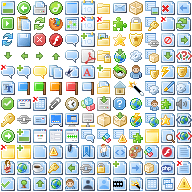
All the positioning of the icons inside this alone image is made through CSS, which allows you to just add block-type tags with the proper class and get the same result:
```html
<div class="famfamfam-mini action_refresh_blue"></div>
```
Just remember to add the CSS stylesheet to the HEAD of your HTML page!
## Install
Get the package with NPM
> npm install famfamfam-mini
Get the package with Bower
> bower install famfamfam-mini
Get the package with Composer / Packagist
> composer require legacy-icons/famfamfam-mini
Get the package with NuGet
> Install-Package famfamfam-mini
## Build the whole project or your custom project
We use [Gulp](http://gulpjs.com/) to build the project, so if you want to re-build or customize this project, you'll need Gulp.
After gulp is installed, and your CLI is pointed to your work directory, first install the dependencies:
**with NPM 2.x.x**
> npm install
**with NPM 3.x.x** (resolve dependencies for `node-spritesheet` before this module's ones)
> npm install grunt grunt-contrib-coffee grunt-contrib-clean
> npm install
then be sure that you have *[ImageMagick](http://www.imagemagick.org/script/binary-releases.php)* installed for building spritesheet.
then, you can run the `gulp build` task to build the project:
> gulp build
### What the build task does?
First, it copies GIF files from the `src` folder, and pastes them to the `dist` folder.
Then it creates a spritesheet from the GIF images located in the `src` folder, and thus creates the `sprite` folder in `dist`.
If, for example you just want `action_stop` and `page_right` icons in a spritesheet, you just have to fork this project, point your CLI to the working directory,
empty the `src` directory, except `action_stop` and `page_right` icons in GIF format, and then run the `gulp build` task.
You'll get the proper spritesheet and copies of the icons directly in the `dist` folder.