@intlayer/skills
Version:
Agent skills for the Intlayer internationalization ecosystem
908 lines (707 loc) • 31.3 kB
Markdown
---
createdAt: 2024-12-07
updatedAt: 2026-05-06
title: Next.js Page Router i18n - How to translate an Next.js app in 2026
description: Discover how to make your Next.js using Page Router website multilingual. Follow the documentation to internationalize (i18n) and translate it.
keywords:
- Internationalization
- Documentation
- Intlayer
- Page Router
- Next.js
- JavaScript
- React
slugs:
- doc
- environment
- nextjs
- next-with-page-router
applicationTemplate: https://github.com/aymericzip/intlayer-next-14-template
applicationShowcase: https://intlayer-next-14-template.vercel.app
history:
- version: 8.9.0
date: 2026-05-04
changes: "Update Solid useIntlayer API usage to direct property access"
- version: 7.5.9
date: 2025-12-30
changes: "Add init command"
- version: 5.6.0
date: 2025-07-06
changes: "Transform `withIntlayer()` function to a promise based function"
- version: 5.5.10
date: 2025-06-29
changes: "Initial history"
---
# Translate your Next.js and Page Router website using Intlayer | Internationalization (i18n)
<Tabs defaultTab="code">
<Tab label="Code" value="code">
<iframe
src="https://ide.intlayer.org/aymericzip/intlayer-next-14-template?file=intlayer.config.ts"
className="m-auto overflow-hidden rounded-lg border-0 max-md:size-full max-md:h-[700px] md:aspect-16/9 md:w-full"
title="Demo CodeSandbox - Intlayer"
sandbox="allow-forms allow-modals allow-popups allow-presentation allow-same-origin allow-scripts"
loading="lazy"
/>
</Tab>
<Tab label="Demo" value="demo">
<iframe
src="https://intlayer-next-14-template.vercel.app"
className="m-auto overflow-hidden rounded-lg border-0 max-md:size-full max-md:h-[700px] md:aspect-16/9 md:w-full"
title="Demo - intlayer-next-14-template"
sandbox="allow-forms allow-modals allow-popups allow-presentation allow-same-origin allow-scripts"
loading="lazy"
/>
</Tab>
</Tabs>
## Table of Contents
<TOC/>
## What is Intlayer?
**Intlayer** is an innovative, open-source internationalization (i18n) library designed to simplify multilingual support in modern web applications. Intlayer seamlessly integrates with the latest **Next.js** framework, including its traditional **Page Router**.
With Intlayer, you can:
- **Easily manage translations** using declarative dictionaries at the component level.
- **Dynamically localize metadata**, routes, and content.
- **Ensure TypeScript support** with autogenerated types, improving autocompletion and error detection.
- **Benefit from advanced features**, like dynamic locale detection and switching.
> Intlayer is compatible with Next.js 12, 13, 14, and 15. If you are using Next.js App Router, refer to the [App Router guide](https://github.com/aymericzip/intlayer/blob/main/docs/docs/en/intlayer_with_nextjs_14.md). For Next.js 15, follow this [guide](https://github.com/aymericzip/intlayer/blob/main/docs/docs/en/intlayer_with_nextjs_15.md).
---
## Step-by-Step Guide to Set Up Intlayer in a Next.js Application Using Page Router
### Step 1: Install Dependencies
Install the necessary packages using your preferred package manager:
```bash packageManager="npm"
npm install intlayer next-intlayer
npx intlayer init
```
```bash packageManager="pnpm"
pnpm add intlayer next-intlayer
pnpm intlayer init
```
```bash packageManager="yarn"
yarn add intlayer next-intlayer
yarn intlayer init
```
```bash packageManager="bun"
bun add intlayer next-intlayer
bun x intlayer init
```
- **intlayer**
The core package that provides internationalization tools for configuration management, translation, [content declaration](https://github.com/aymericzip/intlayer/blob/main/docs/docs/en/dictionary/content_file.md), transpilation, and [CLI commands](https://github.com/aymericzip/intlayer/blob/main/docs/docs/en/cli/index.md).
- **next-intlayer**
The package that integrates Intlayer with Next.js. It provides context providers and hooks for Next.js internationalization. Additionally, it includes the Next.js plugin for integrating Intlayer with [Webpack](https://webpack.js.org/) or [Turbopack](https://nextjs.org/docs/app/api-reference/turbopack), as well as middleware for detecting the user's preferred locale, managing cookies, and handling URL redirection.
### Step 2: Configure Your Project
Create a configuration file to define the languages supported by your application:
```typescript fileName="intlayer.config.ts" codeFormat={["typescript", "esm", "commonjs"]}
import { Locales, type IntlayerConfig } from "intlayer";
const config: IntlayerConfig = {
internationalization: {
locales: [
Locales.ENGLISH,
Locales.FRENCH,
Locales.SPANISH,
// Add your other locales here
],
defaultLocale: Locales.ENGLISH,
},
};
export default config;
```
> Through this configuration file, you can set up localized URLs, middleware redirection, cookie names, the location and extension of your content declarations, disable Intlayer logs in the console, and more. For a complete list of available parameters, refer to the [configuration documentation](https://github.com/aymericzip/intlayer/blob/main/docs/docs/en/configuration.md).
### Step 3: Integrate Intlayer with Next.js Configuration
Modify your Next.js configuration to incorporate Intlayer:
```typescript fileName="next.config.mjs"
import { withIntlayer } from "next-intlayer/server";
/** @type {import('next').NextConfig} */
const nextConfig = {
// Your existing Next.js configuration
};
export default withIntlayer(nextConfig);
```
> The `withIntlayer()` Next.js plugin is used to integrate Intlayer with Next.js. It ensures the building of content declaration files and monitors them in development mode. It defines Intlayer environment variables within the [Webpack](https://webpack.js.org/) or [Turbopack](https://nextjs.org/docs/app/api-reference/turbopack) environments. Additionally, it provides aliases to optimize performance and ensures compatibility with server components.
> The `withIntlayer()` function is a promise function. If you want to use it with other plugins, you can await it. Example:
>
> ```tsx
> const nextConfig = await withIntlayer(nextConfig);
> const nextConfigWithOtherPlugins = withOtherPlugins(nextConfig);
>
> export default nextConfigWithOtherPlugins;
> ```
### Step 4: Configure Middleware for Locale Detection
Set up middleware to automatically detect and handle the user's preferred locale:
```typescript fileName="src/middleware.ts" codeFormat={["typescript", "esm", "commonjs"]}
export { intlayerProxy as middleware } from "next-intlayer/middleware";
export const config = {
matcher:
"/((?!api|static|assets|robots|sitemap|sw|service-worker|manifest|.*\\..*|_next).*)",
};
```
> Adapt the `matcher` parameter to match the routes of your application. For more details, refer to the [Next.js documentation on configuring the matcher](https://nextjs.org/docs/app/building-your-application/routing/middleware).
### Step 5: Define Dynamic Locale Routes
Implement dynamic routing to serve localized content based on the user's locale.
1. **Create Locale-Specific Pages:**
Rename your main page file to include the `[locale]` dynamic segment.
```bash
mv src/pages/index.tsx src/pages/[locale]/index.tsx
```
2. **Update `_app.tsx` to Handle Localization:**
Modify your `_app.tsx` to include Intlayer providers.
```tsx fileName="src/pages/_app.tsx" codeFormat="typescript"
import type { FC } from "react";
import type { AppProps } from "next/app";
import { IntlayerClientProvider } from "next-intlayer";
const App = FC<AppProps>({ Component, pageProps }) => {
const { locale } = pageProps;
return (
<IntlayerClientProvider locale={locale}>
<Component {...pageProps} />
</IntlayerClientProvider>
);
}
export default MyApp;
```
```jsx fileName="src/pages/_app.mjx" codeFormat="esm"
import { IntlayerClientProvider } from "next-intlayer";
const App = ({ Component, pageProps }) => (
<IntlayerClientProvider locale={locale}>
<Component {...pageProps} />
</IntlayerClientProvider>
);
export default App;
```
```jsx fileName="src/pages/_app.csx" codeFormat="commonjs"
const { IntlayerClientProvider } = require("next-intlayer");
const App = ({ Component, pageProps }) => (
<IntlayerClientProvider locale={locale}>
<Component {...pageProps} />
</IntlayerClientProvider>
);
module.exports = App;
```
3. **Set Up `getStaticPaths` and `getStaticProps`:**
In your `[locale]/index.tsx`, define the paths and props to handle different locales.
```tsx fileName="src/pages/[locale]/index.tsx" codeFormat="typescript"
import type { FC } from "react";
import type { GetStaticPaths, GetStaticProps } from "next";
import { type Locales, getConfiguration } from "intlayer";
const HomePage: FC = () => <div>{/* Your content here */}</div>;
export const getStaticPaths: GetStaticPaths = () => {
const { internationalization } = getConfiguration();
const { locales } = internationalization;
const paths = locales.map((locale) => ({
params: { locale },
}));
return { paths, fallback: false };
};
export const getStaticProps: GetStaticProps = ({ params }) => {
const locale = params?.locale as string;
return {
props: {
locale,
},
};
};
export default HomePage;
```
```jsx fileName="src/pages/[locale]/index.mjx" codeFormat="esm"
import { getConfiguration } from "intlayer";
import { ComponentExample } from "@components/ComponentExample";
const HomePage = () => <div>{/* Your content here */}</div>;
export const getStaticPaths = () => {
const { internationalization } = getConfiguration();
const { locales } = internationalization;
const paths = locales.map((locale) => ({
params: { locale },
}));
return { paths, fallback: false };
};
export const getStaticProps = ({ params }) => {
const locale = params?.locale;
return {
props: {
locale,
},
};
};
```
```jsx fileName="src/pages/[locale]/index.csx" codeFormat="commonjs"
const { getConfiguration } = require("intlayer");
const { ComponentExample } = require("@components/ComponentExample");
const HomePage = () => <div>{/* Your content here */}</div>;
const getStaticPaths = async () => {
const { internationalization } = getConfiguration();
const { locales } = internationalization;
const paths = locales.map((locale) => ({
params: { locale },
}));
return { paths, fallback: false };
};
const getStaticProps = async ({ params }) => {
const locale = params?.locale;
return {
props: {
locale,
},
};
};
module.exports = {
getStaticProps,
getStaticPaths,
default: HomePage,
};
```
> `getStaticPaths` and `getStaticProps` ensure that your application pre-builds the necessary pages for all locales in Next.js Page Router. This approach reduces runtime computation and leads to an improved user experience. For more details, refer to the Next.js documentation on [`getStaticPaths`](https://nextjs.org/docs/pages/building-your-application/data-fetching/get-static-paths) and [`getStaticProps`](https://nextjs.org/docs/pages/building-your-application/data-fetching/get-static-props).
### Step 6: Declare Your Content
Create and manage your content declarations to store translations.
```tsx fileName="src/pages/[locale]/home.content.ts" contentDeclarationFormat={["typescript", "esm", "commonjs"]}
import { t, type Dictionary } from "intlayer";
const homeContent = {
key: "home",
content: {
title: t({
en: "Welcome to My Website",
fr: "Bienvenue sur mon site Web",
es: "Bienvenido a mi sitio web",
}),
description: t({
en: "Get started by editing this page.",
fr: "Commencez par éditer cette page.",
es: "Comience por editar esta página.",
}),
},
} satisfies Dictionary;
export default homeContent;
```
```json fileName="src/pages/[locale]/home.content.json" contentDeclarationFormat="json"
{
"$schema": "https://intlayer.org/schema.json",
"key": "home",
"content": {
"getStarted": {
"nodeType": "translation",
"translation": {
"en": "Get started by editing this page.",
"fr": "Commencez par éditer cette page.",
"es": "Comience por editar esta página."
}
},
"pageLink": {
"nodeType": "translation",
"translation": {
"en": "src/app/page.tsx",
"fr": "src/app/page.tsx",
"es": "src/app/page.tsx"
}
}
}
}
```
For more information on declaring content, refer to the [content declaration guide](https://github.com/aymericzip/intlayer/blob/main/docs/docs/en/dictionary/content_file.md).
### Step 7: Utilize Content in Your Code
Access your content dictionaries throughout your application to display translated content.
```tsx {2,6} fileName="src/pages/[locale]/index.tsx" codeFormat={["typescript", "esm"]}
import type { FC } from "react";
import { useIntlayer } from "next-intlayer";
import { ComponentExample } from "@components/ComponentExample";
const HomePage: FC = () => {
const content = useIntlayer("home");
return (
<div>
<h1>{content.title}</h1>
<p>{content.description}</p>
<ComponentExample />
{/* Additional components */}
</div>
);
};
// ... Rest of the code, including getStaticPaths and getStaticProps
export default HomePage;
```
```tsx fileName="src/components/ComponentExample.tsx" codeFormat={["typescript", "esm"]}
import type { FC } from "react";
import { useIntlayer } from "next-intlayer";
export const ComponentExample: FC = () => {
const content = useIntlayer("component-example"); // Ensure you have a corresponding content declaration
return (
<div>
<h2>{content.title}</h2>
<p>{content.content}</p>
</div>
);
};
```
> When using translations in `string` attributes (e.g., `alt`, `title`, `href`, `aria-label`), call the
> value of the function as follows:
> ```html
> <img src="{content.image.src.value}" alt="{content.image.value}" />
> <img src="{content.image.src.toString()}" alt="{content.image.toString()}" />
> <img src="{String(content.image.src)}" alt="{String(content.image)}" />
> ```
> To Learn more about the `useIntlayer` hook, refer to the [documentation](https://github.com/aymericzip/intlayer/blob/main/docs/docs/en/packages/next-intlayer/useIntlayer.md).
### (Optional) Step 8: Internationalization of your metadata
In the case you want to internationalize your metadata, such as the title of your page, you can use the `getStaticProps` function provided by Next.js Page Router. Inside, you can retrieve the content from the `getIntlayer` function to translate your metadata.
```typescript fileName="src/pages/[locale]/metadata.content.ts" contentDeclarationFormat={["typescript", "esm", "commonjs"]}
import { type Dictionary, t } from "intlayer";
import { type Metadata } from "next";
const metadataContent = {
key: "page-metadata",
content: {
title: t({
en: "Create Next App",
fr: "Créer une application Next.js",
es: "Crear una aplicación Next.js",
}),
description: t({
en: "Generated by create next app",
fr: "Généré par create next app",
es: "Generado por create next app",
}),
},
} satisfies Dictionary<Metadata>;
export default metadataContent;
```
```json fileName="src/pages/[locale]/metadata.content.json" contentDeclarationFormat="json"
{
"key": "page-metadata",
"content": {
"title": {
"nodeType": "translation",
"translation": {
"en": "Preact logo",
"fr": "Logo Preact",
"es": "Logo Preact",
},
},
"description": {
"nodeType": "translation",
"translation": {
"en": "Generated by create next app",
"fr": "Généré par create next app",
"es": "Generado por create next app",
},
},
},
};
```
````tsx fileName="src/pages/[locale]/index.tsx" codeFormat={["typescript", "esm"]}
import { GetStaticPaths, GetStaticProps } from "next";
import { getIntlayer, getMultilingualUrls } from "intlayer";
import { useIntlayer } from "next-intlayer";
import Head from "next/head";
import type { FC } from "react";
interface HomePageProps {
locale: string;
metadata: {
title: string;
description: string;
};
multilingualUrls: Record<string, string>;
}
const HomePage: FC<HomePageProps> = ({
metadata,
multilingualUrls,
locale,
}) => {
const content = useIntlayer("page");
return (
<div>
<Head>
<title>{metadata.title}</title>
<meta name="description" content={metadata.description} />
{/* Generate hreflang tags for SEO */}
{Object.entries(multilingualUrls).map(([lang, url]) => (
<link key={lang} rel="alternate" hrefLang={lang} href={url} />
))}
<link rel="canonical" href={multilingualUrls[locale]} />
</Head>
{/* Page content */}
<main>{/* Your page content here */}</main>
</div>
);
};
export const getStaticProps: GetStaticProps<HomePageProps> = async ({
params,
}) => {
const locale = params?.locale as string;
const metadata = getIntlayer("page-metadata", locale);
/**
* Generates an object containing all url for each locale.
*
* Example:
* ```ts
* getMultilingualUrls('/about');
*
* // Returns
* // {
* // en: '/about',
* // fr: '/fr/about',
* // es: '/es/about',
* // }
* ```
*/
const multilingualUrls = getMultilingualUrls("/");
return {
props: {
locale,
metadata,
multilingualUrls,
},
};
};
export default HomePage;
// ... Rest of the code including getStaticPaths
````
> Note that the `getIntlayer` function imported from `next-intlayer` returns your content wrapped in an `IntlayerNode`, allowing integration with the visual editor. In contrast, the `getIntlayer` function imported from `intlayer` returns your content directly without additional properties.
Alternatively, you can use the `getTranslation` function to declare your metadata. However, using content declaration files is recommended to automate the translation of your metadata and externalize the content at some point.
```tsx fileName="src/pages/[locale]/index.tsx" codeFormat={["typescript", "esm"]}
import { GetStaticPaths, GetStaticProps } from "next";
import {
type IConfigLocales,
getTranslation,
getMultilingualUrls,
} from "intlayer";
import { useIntlayer } from "next-intlayer";
import Head from "next/head";
import type { FC } from "react";
interface HomePageProps {
locale: string;
metadata: {
title: string;
description: string;
};
multilingualUrls: Record<string, string>;
}
const HomePage: FC<HomePageProps> = ({ metadata, multilingualUrls, locale }) => {
const content = useIntlayer("page");
return (
<div>
<Head>
<title>{metadata.title}</title>
<meta name="description" content={metadata.description} />
{/* Generate hreflang tags for SEO */}
{Object.entries(multilingualUrls).map(([lang, url]) => (
<link
key={lang}
rel="alternate"
hrefLang={lang}
href={url}
/>
))}
<link rel="canonical" href={multilingualUrls[locale]} />
</Head>
{/* Page content */}
<main>
{/* Your page content here */}
</main>
</div>
);
};
export const getStaticProps: GetStaticProps<HomePageProps> = async ({
params
}) => {
const locale = params?.locale as string;
const t = <T>(content: IConfigLocales<T>) => getTranslation(content, locale);
const metadata = {
title: t<string>({
en: "My title",
fr: "Mon titre",
es: "Mi título",
}),
description: t({
en: "My description",
fr: "Ma description",
es: "Mi descripción",
}),
};
const multilingualUrls = getMultilingualUrls("/");
return {
props: {
locale,
metadata,
multilingualUrls,
},
};
};
export default HomePage;
// ... Rest of the code including getStaticPaths
```
> Learn more about the metadata optimization [on the official Next.js documentation](https://nextjs.org/docs/pages/building-your-application/optimizing/metadata).
### (Optional) Step 9: Change the language of your content
To change the language of your content in Next.js, the recommended way is to use the `Link` component to redirect users to the appropriate localized page. The `Link` component enables prefetching of the page, which helps avoid a full page reload.
```tsx fileName="src/components/LanguageSwitcher.tsx" codeFormat={["typescript", "esm"]}
import {
Locales,
getHTMLTextDir,
getLocaleName,
getLocalizedUrl,
} from "intlayer";
import { useLocalePageRouter } from "next-intlayer";
import { type FC } from "react";
import Link from "next/link";
const LocaleSwitcher: FC = () => {
const { locale, pathWithoutLocale, availableLocales } = useLocalePageRouter();
return (
<div>
<button popoverTarget="localePopover">{getLocaleName(locale)}</button>
<div id="localePopover" popover="auto">
{availableLocales.map((localeItem) => (
<Link
href={getLocalizedUrl(pathWithoutLocale, localeItem)}
hrefLang={localeItem}
key={localeItem}
aria-current={locale === localeItem ? "page" : undefined}
onClick={() => setLocale(localeItem)}
>
<span>
{/* Locale - e.g. FR */}
{localeItem}
</span>
<span>
{/* Language in its own Locale - e.g. Français */}
{getLocaleName(localeItem, locale)}
</span>
<span dir={getHTMLTextDir(localeItem)} lang={localeItem}>
{/* Language in current Locale - e.g. Francés with current locale set to Locales.SPANISH */}
{getLocaleName(localeItem)}
</span>
<span dir="ltr" lang={Locales.ENGLISH}>
{/* Language in English - e.g. French */}
{getLocaleName(localeItem, Locales.ENGLISH)}
</span>
</Link>
))}
</div>
</div>
);
};
```
> An alternative way is to use the `setLocale` function provided by the `useLocale` hook. This function will not allow prefetching the page and will reload the page.
> In this case, without redirection using `router.push`, only your server-side code will change the locale of the content.
```tsx fileName="src/components/LocaleSwitcher.tsx" codeFormat="typescript"
"use client";
import { useRouter } from "next/navigation";
import { useLocale } from "next-intlayer";
import { getLocalizedUrl } from "intlayer";
// ... Rest of the code
const router = useRouter();
const { setLocale } = useLocale({
onLocaleChange: (locale) => {
router.push(getLocalizedUrl(pathWithoutLocale, locale));
},
});
return (
<button onClick={() => setLocale(Locales.FRENCH)}>Change to French</button>
);
```
> The `useLocalePageRouter` API is the same as `useLocale`. To Learn more about the `useLocale` hook, refer to the [documentation](https://github.com/aymericzip/intlayer/blob/main/docs/docs/en/packages/next-intlayer/useLocale.md).
> Documentation references:
>
> - [`getLocaleName` hook](https://github.com/aymericzip/intlayer/blob/main/docs/docs/en/packages/intlayer/getLocaleName.md)
> - [`getLocalizedUrl` hook](https://github.com/aymericzip/intlayer/blob/main/docs/docs/en/packages/intlayer/getLocalizedUrl.md)
> - [`getHTMLTextDir` hook](https://github.com/aymericzip/intlayer/blob/main/docs/docs/en/packages/intlayer/getHTMLTextDir.md)
> - [`hrefLang` attribute](https://developers.google.com/search/docs/specialty/international/localized-versions?hl=fr)
> - [`lang` attribute](https://developer.mozilla.org/en-US/docs/Web/HTML/Global_attributes/lang)
> - [`dir` attribute](https://developer.mozilla.org/en-US/docs/Web/HTML/Global_attributes/dir)
> - [`aria-current` attribute](https://developer.mozilla.org/en-US/docs/Web/Accessibility/ARIA/Attributes/aria-current)
### (Optional) Step 10: Creating a Localized Link Component
To ensure that your application’s navigation respects the current locale, you can create a custom `Link` component. This component automatically prefixes internal URLs with the current language, so that. For example, when a French-speaking user clicks on a link to the "About" page, they are redirected to `/fr/about` instead of `/about`.
This behavior is useful for several reasons:
- **SEO and User Experience**: Localized URLs help search engines index language-specific pages correctly and provide users with content in their preferred language.
- **Consistency**: By using a localized link throughout your application, you guarantee that navigation stays within the current locale, preventing unexpected language switches.
- **Maintainability**: Centralizing the localization logic in a single component simplifies the management of URLs, making your codebase easier to maintain and extend as your application grows.
Below is the implementation of a localized `Link` component in TypeScript:
```tsx fileName="src/components/Link.tsx" codeFormat={["typescript", "esm"]}
"use client";
import { getLocalizedUrl } from "intlayer";
import NextLink, { type LinkProps as NextLinkProps } from "next/link";
import { useLocale } from "next-intlayer";
import { forwardRef, PropsWithChildren, type ForwardedRef } from "react";
/**
* Utility function to check whether a given URL is external.
* If the URL starts with http:// or https://, it's considered external.
*/
export const checkIsExternalLink = (href?: string): boolean =>
/^https?:\/\//.test(href ?? "");
/**
* A custom Link component that adapts the href attribute based on the current locale.
* For internal links, it uses `getLocalizedUrl` to prefix the URL with the locale (e.g., /fr/about).
* This ensures that navigation stays within the same locale context.
*/
export const Link = forwardRef<
HTMLAnchorElement,
PropsWithChildren<NextLinkProps>
>(({ href, children, ...props }, ref: ForwardedRef<HTMLAnchorElement>) => {
const { locale } = useLocale();
const isExternalLink = checkIsExternalLink(href.toString());
// If the link is internal and a valid href is provided, get the localized URL.
const hrefI18n: NextLinkProps["href"] =
href && !isExternalLink ? getLocalizedUrl(href.toString(), locale) : href;
return (
<NextLink href={hrefI18n} ref={ref} {...props}>
{children}
</NextLink>
);
});
Link.displayName = "Link";
```
#### How It Works
- **Detecting External Links**:
The helper function `checkIsExternalLink` determines whether a URL is external. External links are left unchanged because they do not need localization.
- **Retrieving the Current Locale**:
The `useLocale` hook provides the current locale (e.g., `fr` for French).
- **Localizing the URL**:
For internal links (i.e., non-external), `getLocalizedUrl` is used to automatically prefix the URL with the current locale. This means that if your user is in French, passing `/about` as the `href` will transform it to `/fr/about`.
- **Returning the Link**:
The component returns an `<a>` element with the localized URL, ensuring that navigation is consistent with the locale.
By integrating this `Link` component across your application, you maintain a coherent and language-aware user experience while also benefitting from improved SEO and usability.
### (Optional) Step 11: Optimize your bundle size
When using `next-intlayer`, dictionaries are included in the bundle for every page by default. To optimize bundle size, Intlayer provides an optional SWC plugin that intelligently replace `useIntlayer` calls using macros. This ensures dictionaries are only included in bundles for pages that actually use them.
To enable this optimization, install the `/swc` package. Once installed, `next-intlayer` will automatically detect and use the plugin:
```bash packageManager="npm"
npm install /swc --save-dev
```
```bash packageManager="pnpm"
pnpm add /swc --save-dev
```
```bash packageManager="yarn"
yarn add /swc --save-dev
```
```bash packageManager="bun"
bun add /swc --dev
```
> Note: This optimization is only available for Next.js 13 and above.
> Note: This package is not installed by default because SWC plugins are still experimental on Next.js. It may change in the future.
### Configure TypeScript
Intlayer use module augmentation to get benefits of TypeScript and make your codebase stronger.
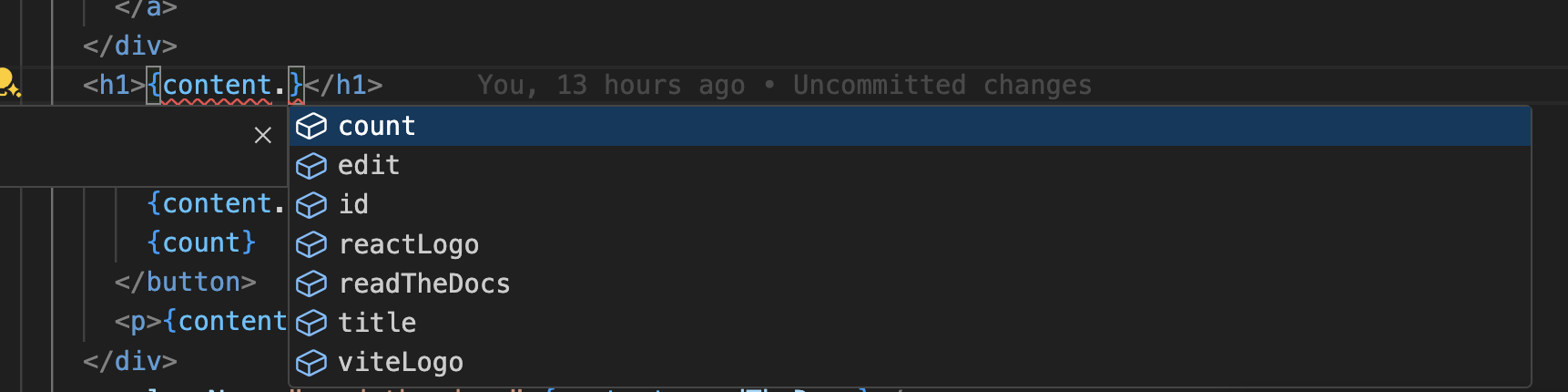
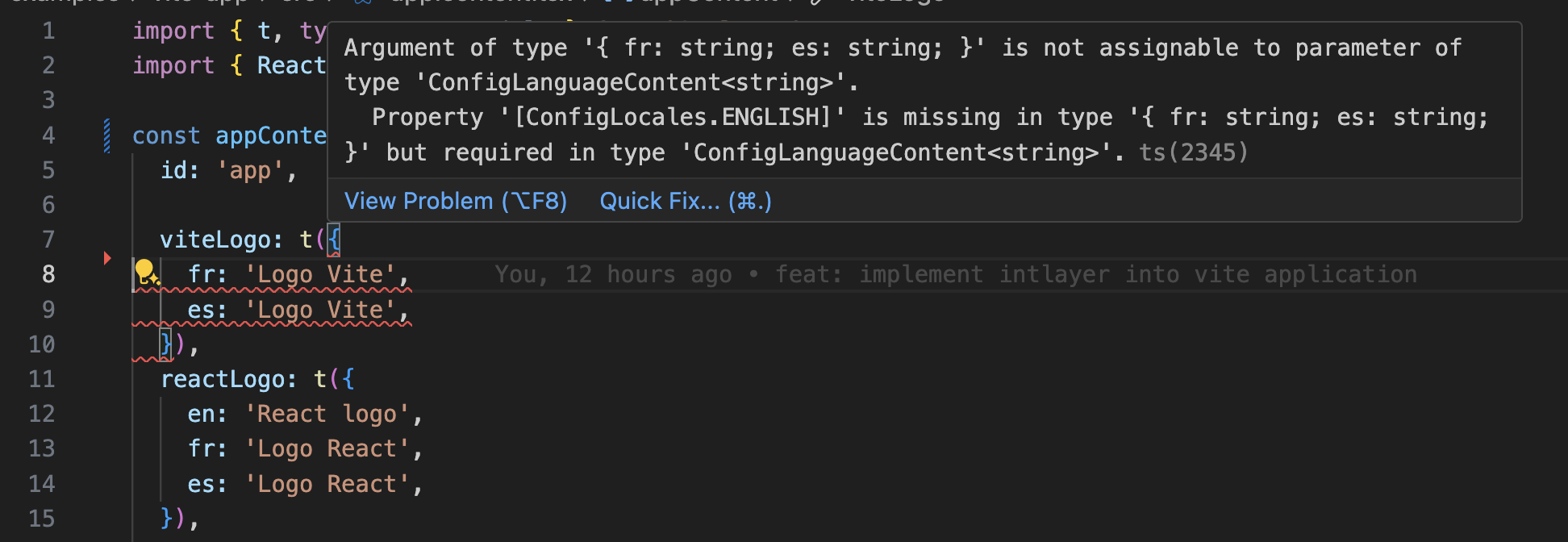
Ensure your TypeScript configuration includes the autogenerated types.
```json5 fileName="tsconfig.json"
{
// ... Your existing TypeScript configurations
"include": [
// ... Your existing TypeScript configurations
".intlayer/**/*.ts", // Include the auto-generated types
],
}
```
### Git Configuration
To keep your repository clean and avoid committing generated files, it's recommended to ignore files created by Intlayer.
Add the following lines to your `.gitignore` file:
```plaintext fileName=".gitignore"
# Ignore the files generated by Intlayer
.intlayer
```
### VS Code Extension
To improve your development experience with Intlayer, you can install the official **Intlayer VS Code Extension**.
[Install from the VS Code Marketplace](https://marketplace.visualstudio.com/items?itemName=intlayer.intlayer-vs-code-extension)
This extension provides:
- **Autocompletion** for translation keys.
- **Real-time error detection** for missing translations.
- **Inline previews** of translated content.
- **Quick actions** to easily create and update translations.
For more details on how to use the extension, refer to the [Intlayer VS Code Extension documentation](https://intlayer.org/doc/vs-code-extension).
## Additional Resources
- **Intlayer Documentation:** [GitHub Repository](https://github.com/aymericzip/intlayer)
- **Dictionary Guide:** [Dictionary](https://github.com/aymericzip/intlayer/blob/main/docs/docs/en/dictionary/content_file.md)
- **Configuration Documentation:** [Configuration Guide](https://github.com/aymericzip/intlayer/blob/main/docs/docs/en/configuration.md)
By following this guide, you can effectively integrate Intlayer into your Next.js application using the Page Router, enabling robust and scalable internationalization support for your web projects.
### Go Further
To go further, you can implement the [visual editor](https://github.com/aymericzip/intlayer/blob/main/docs/docs/en/intlayer_visual_editor.md) or externalize your content using the [CMS](https://github.com/aymericzip/intlayer/blob/main/docs/docs/en/intlayer_CMS.md).